Qaydence
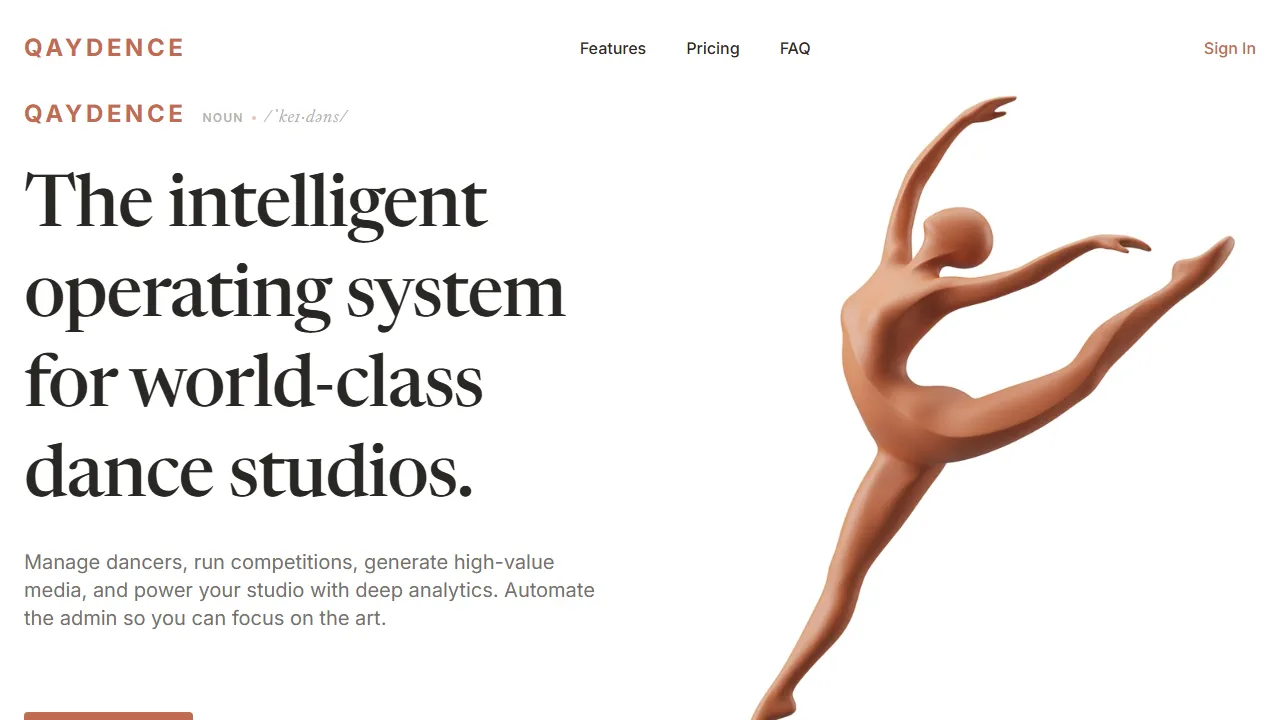
Multi-tenant studio operations platform with studio-scoped Row Level Security on Supabase PostgreSQL, competition matrices, and split billing.
Production Impact
Zero cross-tenant data exposure across all studios.
Real-time leaderboard updates during competitive dance rounds.
Actively serving dance studios and competitive academies.
The Engineering Challenge
Dance studios manage complex choreography rosters, competition registrations, parent accounts, and tuition fees. Most software either lacks multi-tenant data isolation or cannot handle complex competition scoring brackets and multi-child family billing splits.
System Design & Pipeline
Built on a single-database multi-tenant model where every query is strictly governed by PostgreSQL Row Level Security (RLS) policies tied to JWT studio claims.
[Dance Studio Users: Directors, Instructors, Parents]
                     |
                     v
             [React Web App (PWA)]
                     |
                     v  (Authenticated JWT with tenant_id)
        [Supabase API / PostgREST Gateway]
                     |
                     v
     [PostgreSQL Database with Enforced RLS]
     - Policy: tenant_id = current_setting('app.tenant_id')
     - Table: students, classes, invoices, scores
                     |
                     v
           [Strict Tenant Isolation]
Step 01: Multi-Tenant RLS Enforcement
Database policies automatically filter all SELECT, INSERT, UPDATE, and DELETE operations by studio tenant ID, making cross-tenant data leakage impossible.
Step 02: Competition Matrix Engine
Computes dynamic age brackets, difficulty categories, and live judge scoring tallies with instantaneous rank updates.
Step 03: Parent Billing & Family Splits
Automates multi-child tuition discounts, costume fees, and itemized monthly account statements.
Technical Decisions
React frontend with Supabase serverless backend, leveraging PostgreSQL functions, triggers, and Row Level Security policies.
Engine-level PostgreSQL RLS over application-layer filtering
Even if application logic has a bug, the database engine itself rejects queries across different studio boundaries.
Complex multi-table join policies require indexed foreign keys to prevent sequential scans.
PostgreSQL generated columns for competition eligibility
Offloaded age division calculations into the DB schema, ensuring instant sorting without frontend computation.
Schema changes to division cutoff rules require database migrations.
Technical Stack
- Languages
- TypeScript · SQL
- Frameworks & Libs
- React · Supabase · Tailwind CSS
- Infrastructure
- PostgreSQL · Supabase Cloud · Vercel
- Protocols & Formats
- REST · Realtime WebSockets · PostgREST
- Testing & Profiling
- Vitest · pgTAP Database Unit Tests